
Mediation in Australia gives separating couples a structured way to discuss parenting, property division, child support, debts and other issues before considering litigation. The mediator helps both parties communicate, explore potential solutions and work towards an agreement. Under the Family Law Act 1975 (Cth), some family law disputes may require dispute resolution before court proceedings begin.
Key Takeaways
- Mediation is designed to support communication and cooperation during separation.
- The mediation process can occur before, during or after divorce proceedings.
- Agreements can be documented and later turned into legally binding consent orders.
How does mediation work in Australia?
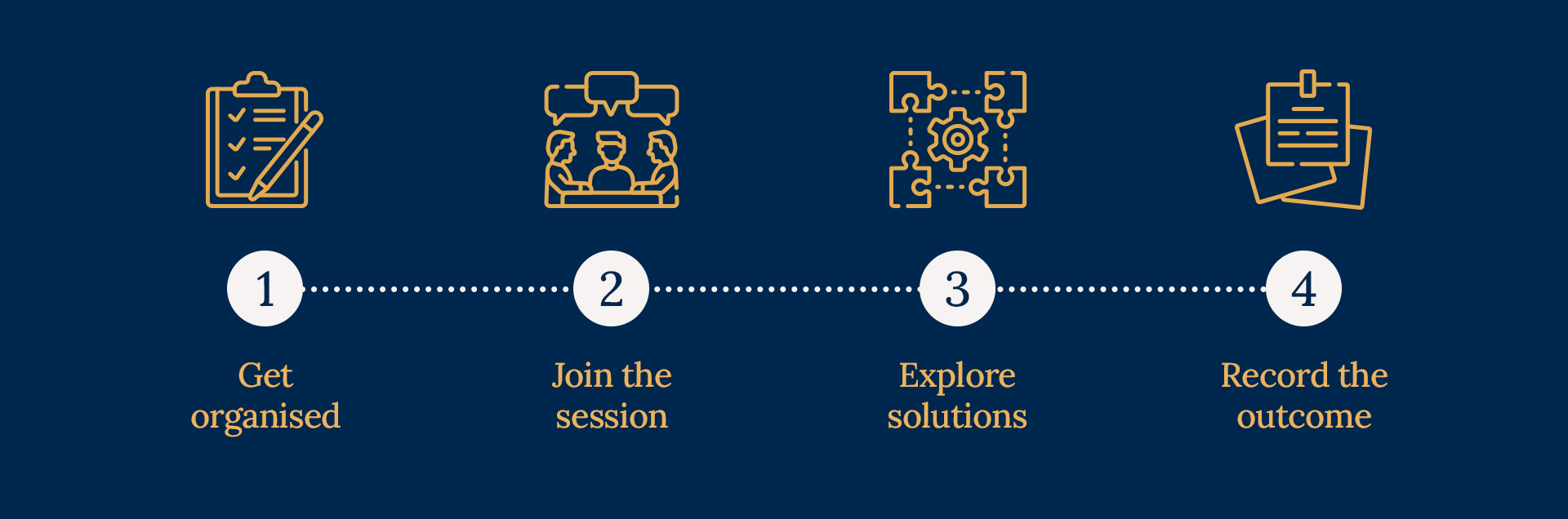
The mediation process usually involves preparation, one or more mediation sessions, negotiation and written outcomes. It is designed to help separated couples resolve family law issues with the guidance of a neutral third party, without immediately starting court proceedings in the Federal Circuit and Family Court of Australia (FCFCOA). In family law mediations, often the parties are not placed together in the same room. This is called a ‘shuttle mediation’ in which the mediator moves from one room to another to discuss the ongoing negotiations with each party.
- 01

Step 1: Prepare for the session
Start by identifying the issues you need to resolve. These may include splitting assets, parenting arrangements, communication, child support, debts or spousal maintenance. Providing clear information helps the mediator understand the dispute.
- 02

Step 2: Attend mediation
An accredited mediator or family dispute resolution practitioner will outline how the session will run. They will explain confidentiality, respectful communication and each person’s role in the discussion.
- 03

Step 3: Work through each issue
The mediator helps both parties focus on one issue at a time. They may ask questions, reframe concerns and help you consider practical options. Mediation is not a ‘Mini’ Trial, and often both parties are required to make concessions to allow the matter to be resolved, without having to initiate Court proceedings.
- 04

Step 4: Document the outcomes
If an agreement is reached, the next step is to document it clearly in what is usually referred to as a ‘Heads of Agreement.’ For legal and financial matters, it is wise to consult a family lawyer before signing anything or applying for consent orders.
What happens during mediation?
A mediation or family dispute resolution session usually starts with the mediator explaining the process, ground rules and confidentiality. Each person then has time to raise their concerns, explain what matters most and respond to the issues raised by the other party.
The discussion may move between practical, financial and parenting matters. In some cases, the session focuses on one urgent issue. In others, it may cover broader arrangements connected to divorce, separation and property settlement.
Common topics include:
- Parenting plans, school arrangements and holiday time
- Property settlement, asset division and shared debts
- Child support or spousal maintenance concerns
- Communication boundaries after separation
What are the benefits of mediation?
One of the main benefits of mediation is that it gives separating couples a chance to resolve issues themselves, before court proceedings become necessary. It can support cost savings, privacy and emotional well-being while helping both parties stay focused on practical solutions.
When mediation works well, it may also preserve communication and cooperation for future parenting or financial arrangements.
How to get a mediator for your family law matter
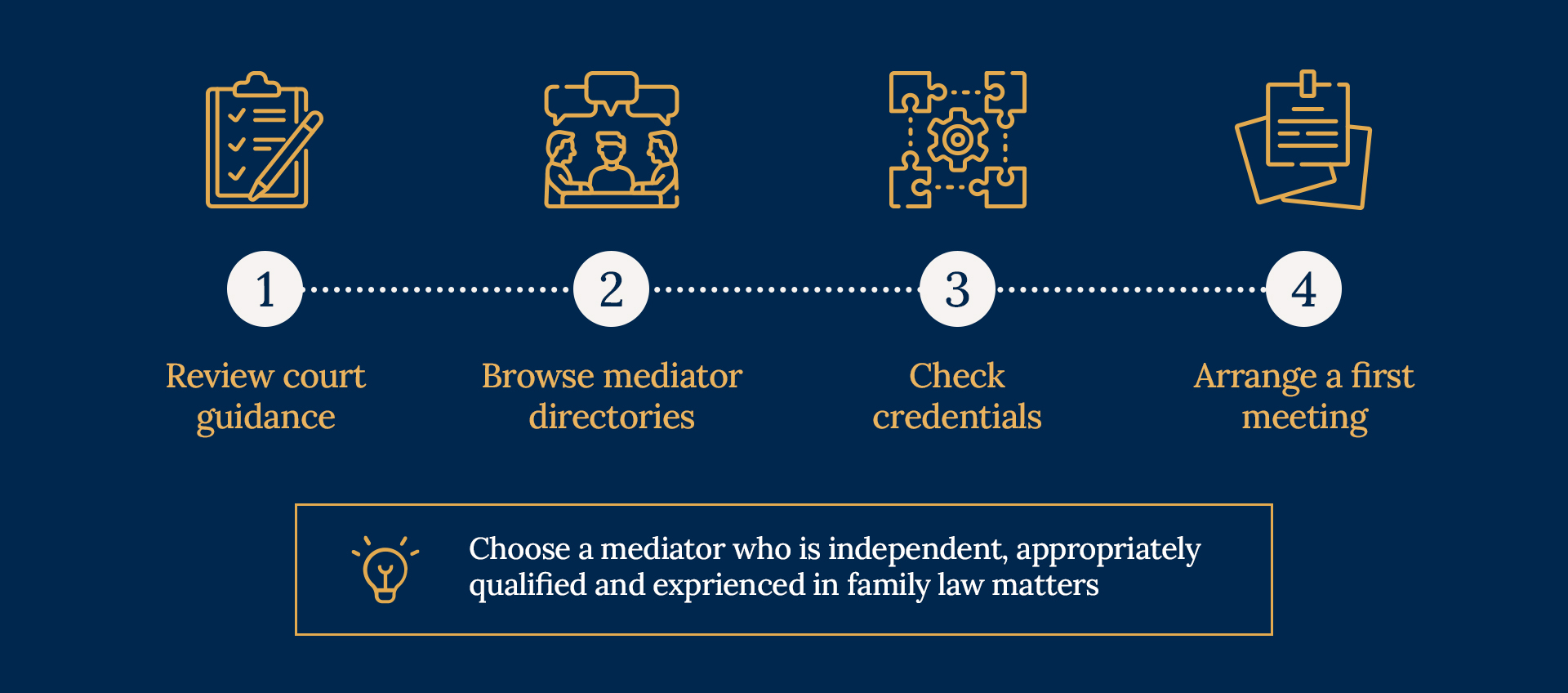
A mediator for family law matters can be found through an accredited register, the Australian Mediation Register, a family law institute or a recommendation from your family lawyer. The aim is to find a trained neutral third party who can facilitate communication and negotiation, helping both parties work towards practical solutions without immediately going to court.
- 01
Step 1: Check FCFCOA guidance
The FCFCOA provides guidance on when family dispute resolution may be needed before court applications, particularly where children are involved. This is a useful first step if you are unsure whether mediation can occur in your circumstances.
- 02
Step 2: Search an accredited register
Use the Australian Mediation Register or another recognised register to find a mediator with experience in family law mediation. For parenting matters, look for an accredited FDR practitioner who understands child custody, parenting arrangements and family violence screening.
- 03
Step 3: Confirm accreditation and suitability
Before choosing a mediator, assess their expertise, training and approach. A good mediator helps separated couples discuss difficult issues, but they do not take sides, provide legal advice or make decisions for either client.
- 04
Step 4: Book a consultation
Use the consultation to ask how the mediator will tailor the process to your circumstances. If the parties involved are able to reach an agreement, a family lawyer can then help document the outcome so it is clear, practical and legally appropriate.
Questions to ask your mediator
Good preparation can make the dispute resolution process more productive, especially when the relationship has become strained or when children are involved. Before you begin, ask practical questions about the mediator’s role, confidentiality and agreement scope, as well as whether mediation is suitable for your circumstances.
Questions to ask include:
- What experience do you have helping separated couples negotiate and settle family law matters?
- How do you keep the process constructive and cooperative if communication is tense?
- What issues can we discuss, and what is outside the scope of the agreement?
- How does confidentiality work during and after mediation?
- How do you manage sessions involving children?
- Are there situations where mediation cannot be used safely or fairly?
- Should I speak with a family lawyer before or after mediation?
Do you need a lawyer during mediation?
You do not always need a lawyer present during mediation, but it is wise to seek legal advice before making decisions or signing any documents put to you either during or after the mediation. A family lawyer can help you understand your obligations and entitlements, prepare for the session and review any proposed consent order or agreement drafting before it becomes legally binding.
Legal advice can help when:
- You are unsure whether the proposed agreement is fair or realistic.
- Property, children, debt, child support or spousal maintenance are involved.
- You want confidence before documenting an agreement after mediation.
Carew Counsel can help you prepare for mediation, understand your options and review any agreement before you take the next step.
What happens if mediation fails?
When mediation does not lead to agreement, the next step depends on the type of dispute. Parenting matters may require a Section 60I certificate before a court application can be filed, while property or financial matters may move to further negotiation, lawyer-led correspondence or family court proceedings. The FCFCOA expects parties to try to resolve disputes before litigation where it is safe to do so.
- Obtain an FDR certificate: For parenting disputes, the family dispute resolution practitioner may issue a Section 60I certificate if mediation does not proceed or an agreement is not reached.
- Provide your Notice of Intention to Issue Proceedings: If mediation is not successful and you are considering making an Application for either parenting or property orders with the FCFOCOA (and in some circumstances, both), you will need to provide your Notice of Intention to Issue to your former spouse, prior to making such an application.
- File with the family court: If you and your former spouse cannot reach an agreement after mediation and you have not received a response to your Notice of Intention to Issue Proceedings within the designated timeframe, you may wish to issue an application with the Court. If this is required, it is strongly recommended to seek legal advice.
For parenting orders, the Section 60I certificate from the mediator, or an exemption, is usually required.
- Attend the next court step: Once your application has been filed, your matter will be listed for a ‘First Return Hearing’ with the Court (unless the Court considers your matter urgent). Your matter may then proceed to directions, an interim defended hearing, dispute resolution or a final hearing before either final parenting or property orders are made. The Court may require you and your former spouse to attend another mediation, even if your first mediation is unsuccessful.
Note: If your matter is urgent, you may be exempt from some of the pre-action procedures. If you consider your matter urgent, we recommend discussing your matter with a family lawyer to seek advice on issuing an urgent application with the Court.
Speak with a family lawyer about mediation
Mediation provides you with a structured way to work through separation issues and provides you with a greater level of control over the final outcome, in comparison to your matter requiring judicial determination.
If you are separated from your former spouse, Carew Counsel can provide you with clear separation advice before or after mediation, helping you move forward with confidence and clarity.
Table of contents