
Key Takeaways
- Family trusts can assist with asset protection, but they are not always protected in divorce or property settlement matters.
- Australian family law courts may consider trust assets part of the property pool depending on control and distributions.
- Discretionary trusts are often examined closely during separation and divorce proceedings.
- The timing, structure, and purpose of the trust can affect how it is treated in family law matters.
- Early legal advice is important when trusts, business interests, or significant assets are involved.
What family trusts really mean during separation
Family trusts are commonly used in Australia for asset protection, estate planning, and managing family wealth, but many people assume trust assets are automatically protected during divorce or property settlement proceedings. In family law matters, however, the court may examine the structure of the trust, who controls it, and how trust assets have been used when determining whether those assets form part of the property pool.
Key factors courts may consider:
- Who controls the trust, including the trustee or appointor
- Whether trust assets have benefited one or both parties
- The timing and purpose of the trust structure
- How distributions and trust income have been managed
- Whether the trust is genuinely independent or closely controlled
How are family trusts treated in Australian family law?

In family law proceedings, family trusts are not automatically excluded from property settlement discussions simply because assets are held in a trust structure. The Family Court may examine the trust deed, the role of the trustee and appointor, the history of distributions, and the level of control a party has over the trust when determining whether trust assets form part of the matrimonial pool.
A discretionary trust may be treated as either property or a financial resource depending on the circumstances of the relationship and how the trust operates in practice. Courts will often look beyond the legal ownership of assets and assess whether one party effectively controls or benefits from the trust and its assets.
In summary
- Courts may consider trust assets part of the property pool in some divorce or separation matters
- The control and operation of the trust are often more important than the trust structure itself
- Family trusts created for legitimate asset protection or estate planning purposes may receive different treatment
Am I entitled to my partner’s family trust?
Whether you are entitled to assets held in your partner’s family trust depends on several factors, including the structure of the trust, the role of the trustee and appointor, the trust deed, and the level of control exercised over the trust assets. In Australian family law matters, the court may consider whether the trust forms part of the property pool or whether it should instead be treated as a financial resource.

Beneficiary status and trust interests
Being a beneficiary of a discretionary trust does not automatically confer ownership of the trust assets. However, courts may still examine the practical benefits a beneficiary receives from the trust.

Control of the trust
If one party effectively controls the trust, such as acting as trustee or appointor, the court may consider the trust assets more closely during property settlement proceedings.

History of trust distributions
The court may review how trust income and assets have historically been distributed and whether one or both parties benefited from those distributions during the relationship.

Timing and purpose of the trust
Trusts established shortly before divorce or separation may receive greater scrutiny, particularly if there are concerns that the trust was used to shield assets from division.

Trust assets and the property pool
Depending on the circumstances, trust assets may form part of the matrimonial pool available for division or be treated as a financial resource relevant to the overall settlement outcome.

Independent administration of the trust
Courts may also assess whether the trust operates independently or whether one party exercises substantial influence over its decisions and assets.
Will a family trust protect my assets during divorce?
Family trusts can provide a level of asset protection, but they are not automatically protected during divorce or property settlement proceedings. In family law matters, courts will often examine how the trust operates in practice, including who controls it, how assets are managed, and whether it has been used for legitimate financial or estate-planning purposes.
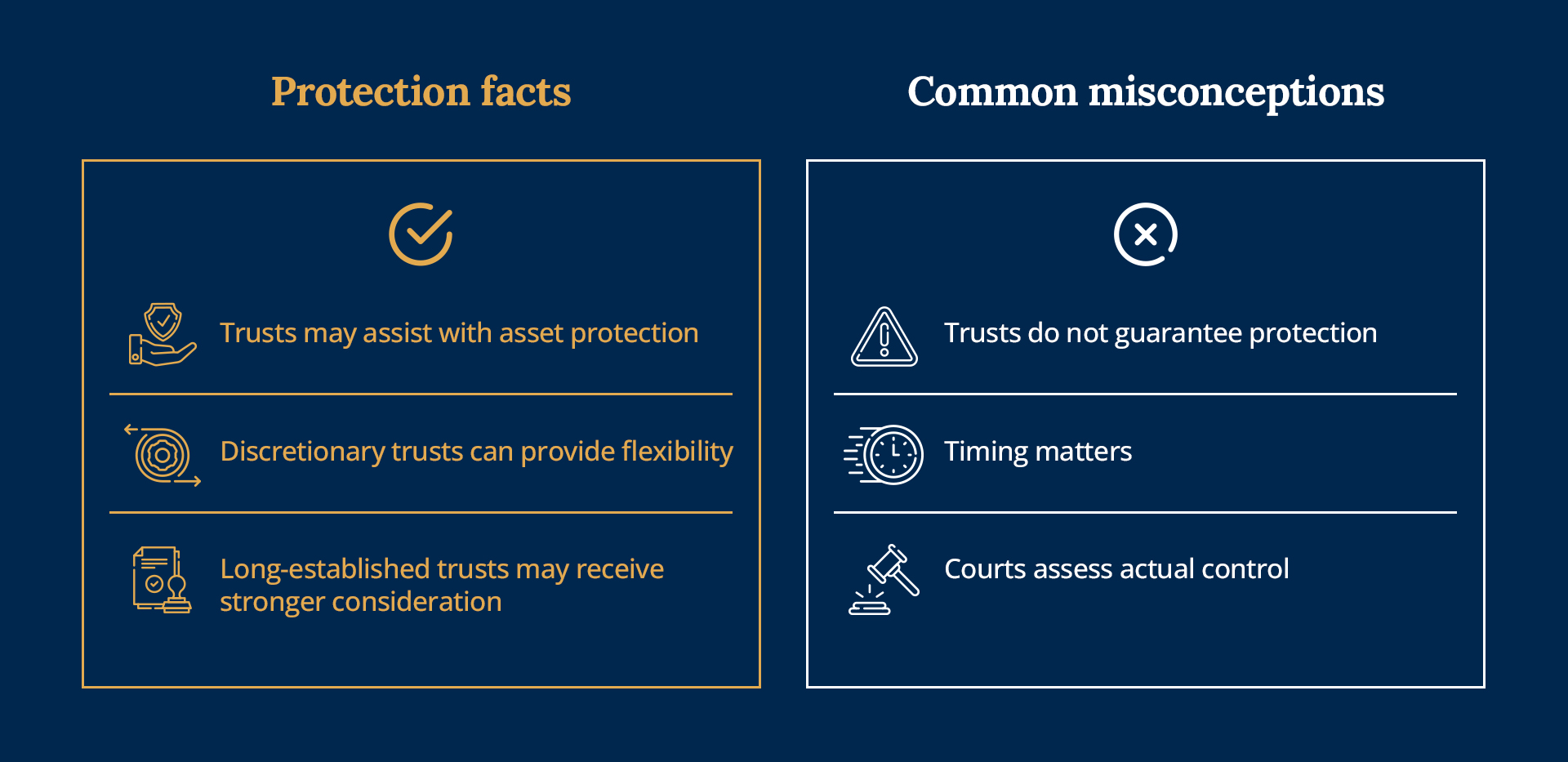
Protection facts
- Family trusts can help separate legal ownership of assets: Assets held in a properly structured trust are generally owned by the trustee rather than an individual beneficiary.
- Discretionary trusts may provide flexibility: Trustees can often control how trust income and assets are distributed among beneficiaries.
- Well-established trusts may offer stronger protection: Trusts created for legitimate asset protection, estate planning, or business purposes long before separation may receive more favourable consideration.
Common misconceptions
- A family trust does not guarantee assets are protected: Courts may still treat trust assets as part of the property pool in some divorce or separation matters.
- Creating a trust shortly before separation is not a guaranteed safeguard: If a trust appears designed to hide or shield assets, the court may closely scrutinise its structure and purpose.
- Control matters more than paperwork alone: Even if assets are legally held by a trust, courts may examine whether one party effectively controls the trust and its assets.
Are there advantages and disadvantages of having a family trust in family law negotiations?
Family trusts can offer important financial and asset protection benefits, but they can also create additional complexity during divorce and property settlement proceedings. Whether a trust is beneficial or problematic often depends on how it is structured, administered, and treated throughout the relationship.
The Family Court will often assess how the trust operates in practice rather than relying solely on the trust structure itself. Factors such as control over the trust, the roles of the trustee and appointor, and the history of trust distributions may all influence how trust assets are treated in family law proceedings.
Protect your assets with the right legal structure
Family trusts can provide valuable asset protection benefits, but the way a trust is structured and managed can significantly affect its treatment during divorce and property settlement proceedings.
How should I set up a family trust to protect myself?
A family trust can assist with asset protection, estate planning, and wealth management, but the structure and timing of the trust are important. In family law matters, courts may examine whether the trust was established for legitimate financial purposes and how much control a party has over the trust and its assets.
- 01

Establish the trust early
Trusts created well before divorce or separation are generally less likely to attract scrutiny than those established shortly before a relationship breakdown.
- 02

Define a legitimate purpose for the trust
Family trusts should be established for genuine purposes such as asset protection, business operations, tax planning, or estate planning rather than attempting to shield assets during separation.
- 03

Carefully consider who controls the trust
The role of the trustee, appointor, and beneficiaries can significantly affect how the trust is treated in family law proceedings.
- 04

Use an appropriate trust structure
A properly drafted trust deed and clear trust structure may help support the independence and legitimacy of the trust arrangement.
- 05

Maintain proper records and administration
Courts may review trust distributions, financial records, and the administration of the trust when assessing trust assets during property settlement matters.
- 06

Obtain legal and financial advice early
Family trusts should be established with advice from experienced legal and financial professionals to ensure the structure aligns with your financial circumstances and long-term objectives.
Is there anything that isn’t protected in a family trust?
While family trusts can provide asset protection and estate planning benefits, they do not automatically protect all assets or financial interests during divorce or property settlement proceedings. Courts may still examine how trust assets are controlled, distributed, and used throughout the relationship when determining whether those assets should form part of the property pool or be treated as a financial resource.
Examples of assets or interests that may still be considered include:
- Trust income distributed to a beneficiary: Regular distributions or ongoing financial benefits received from the trust may be considered during property settlement negotiations.
- Assets transferred into the trust shortly before separation: Courts may closely examine recent transfers if there are concerns that the trust was used to shield assets from division.
- Financial obligations such as child support or spousal maintenance: Family trusts generally do not prevent obligations relating to child support, spousal maintenance, or other family law responsibilities.
Can a family trust be challenged or altered in a divorce?
Family trusts can be challenged during divorce or property settlement proceedings, particularly where there are concerns about control of the trust, the movement of assets, or whether the trust has been used to avoid a fair division of property. In Australian family law matters, courts have broad powers to examine the operation of trusts and assess whether trust assets should be included in the matrimonial pool.
The Family Court may review the trust deed, the role of the trustee and appointor, the history of trust distributions, and the practical benefit received by one or both parties during the relationship. Courts will often look beyond the legal ownership of assets to determine whether a trust effectively operates as a financial resource or part of the property pool available for division.
In some circumstances, courts may alter the way trust assets are treated during property settlement proceedings or scrutinise transactions involving trust property. This is particularly relevant where one party exercises substantial control over the trust or where assets were transferred into the trust shortly before separation or divorce.
When challenges commonly arise
- A party has significant control over the trust as trustee or appointor
- Assets were transferred into the trust shortly before separation
- The trust appears to have been used to shield assets from property settlement claims
How does timing affect trust protection?
The timing of a family trust's establishment and its use can significantly influence how the trust is treated in divorce or property settlement proceedings. Courts may closely examine whether the trust was created for legitimate long-term financial purposes or whether it appears connected to attempts to shield assets during relationship breakdowns.
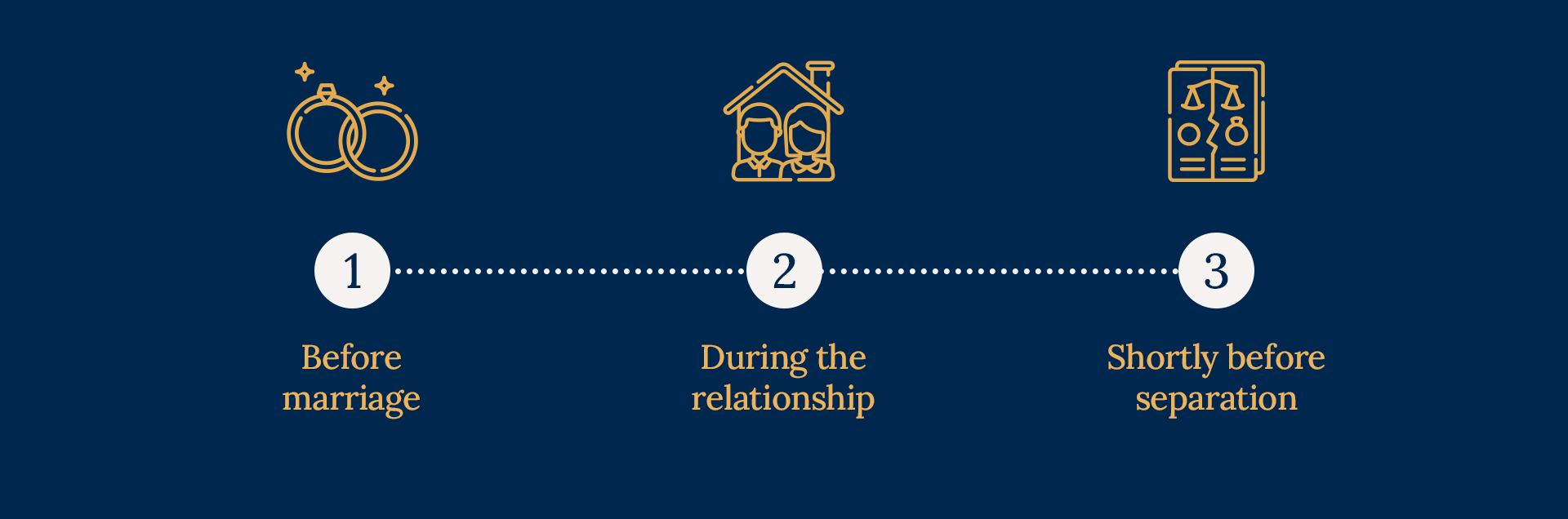
Before marriage or long before separation
Trusts established well before a relationship begins or long before separation may be viewed more favourably, particularly where they were created for genuine asset protection, business, or estate planning purposes.
During the relationship
Courts may assess how the trust operated throughout the relationship, including trust distributions, control of the trust, and whether trust assets benefited one or both parties during the marriage or de facto relationship.
Shortly before or after separation
Trusts created or significantly altered close to separation may attract greater scrutiny, especially if assets were transferred into the trust during a period of relationship breakdown or anticipated property settlement negotiations.

Tip: Review who actually controls the trust
In family law proceedings, courts often look beyond the trust structure itself and examine who genuinely controls the trust in practice. Even where a trust appears independent on paper, factors such as decision-making authority, distributions, and financial benefit may influence how trust assets are treated during property settlement negotiations.

Protect your financial future with the right advice

Family trusts and property settlement matters can quickly become complex, particularly when significant assets or business interests are involved. If you are considering separation or want clarity on trust protection, reach out to our team for practical advice tailored to your circumstances.
Table of contents