
Key Takeaways
- Divorce papers must be served correctly so your spouse is formally notified of the proceedings.
- You cannot serve divorce papers yourself. Another adult, such as a friend, family member or process server, must serve them.
- Your spouse usually has 28 days to respond if served in Australia, or 42 days if served overseas.
Serving divorce papers in Australia is required for a sole divorce application and broader family law proceedings. The service of your divorce papers ensures your spouse is aware of the divorce application and has time to respond before the divorce hearing date.
Under the Family Law Act 1975, your spouse must be properly notified that proceedings have started. The Federal Circuit and Family Court of Australia (FCFCOA) sets rules for the service of documents, including who can serve the papers, how service is proved, and what happens if there is no response.
How do I serve divorce papers?

To serve divorce papers, you can post the documents, arrange for them to be served by hand or use a professional process server. If you have filed a sole application for divorce, you need to serve the divorce documents on your spouse and then file proof of service with the court.
The FCFCOA explains that service is the process of delivering filed court documents to another party so they know a case has been started.
If your spouse is in Australia, the documents must be served at least 28 days before the divorce hearing. If your spouse is overseas, they must be served at least 42 days before the divorce hearing.
- 01

Prepare your service documents
Download the Divorce Service Kit and gather the documents that need to be served, including the sealed Application for Divorce and any supporting documents.
- 02

Print the filed documents
Log in to the Commonwealth Courts Portal, open your file and download the filed documents. Make sure the copies are clear and complete.
- 03

Serve the documents
Choose the right method of service. For service by post, include the required divorce documents, the Acknowledgment of Service form and a self-addressed envelope so your spouse can return the signed form.
If the papers are served by hand, the server must hand the documents to your spouse and later file an affidavit confirming how service took place.
- 04

File the affidavit of service
Once service is complete, the correct affidavit of service must be signed, witnessed and uploaded to the Commonwealth Courts Portal. This gives the court proof that your spouse received the divorce documents.
- 05

Wait for a response
After the papers are served, your spouse has time to file a response if they want to oppose the divorce or correct details in the application.
Who can serve divorce papers?
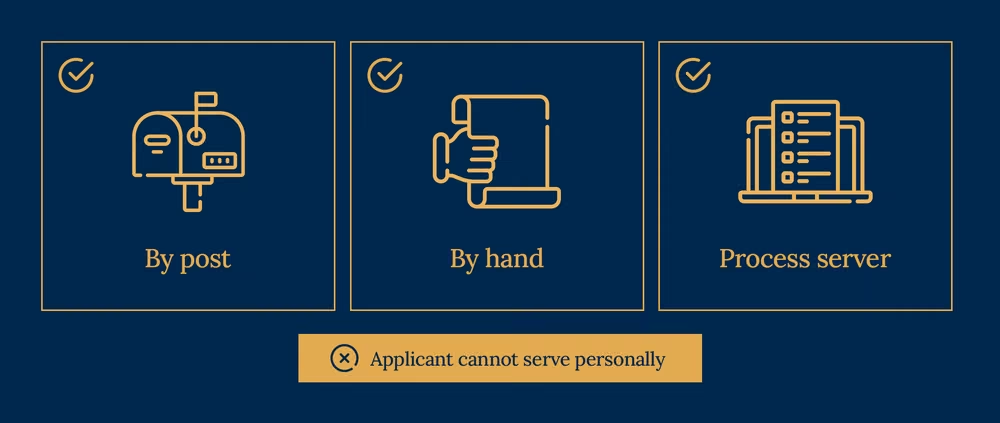
You can ask a trusted adult to serve documents for you, provided they are over 18 and are not the applicant. The court rules do not allow you to personally serve the divorce documents on your spouse. This person is sometimes called the server. They may need to complete the correct court form or affidavit so you can file proof of service with the court.
Eligible servers may include:
- A friend who is over 18
- A family member who is over 18
- A professional process server
- Your spouse’s lawyer, if they have agreed in writing to accept service
A process server can be helpful if you are unsure how your spouse will respond, if you do not want to involve someone you know, or if you need clear records for the affidavit. The FCFCOA confirms that service by hand can be carried out by a friend, a family member, or a professional service, but not by the applicant.
Need help with serving divorce papers?
Serving divorce papers can feel stressful, especially if your spouse will not respond, lives overseas, or the service has not gone to plan. Carew Counsel can review your documents, explain your options and help you take the next step with confidence.
Why can’t you serve divorce papers yourself?
If your spouse accepts the documents but later disputes service, the court may require an affidavit proving signature or another sworn statement confirming how service was effected.
A common myth is that you can hand divorce papers to your spouse yourself if the documents are correct. In reality, applicants cannot personally serve divorce papers because the court requires independent verification of service from an impartial witness.
For example, if you ask a friend, family member, or process server to serve the documents, they can later complete a court affidavit confirming when and how service took place. This helps the court verify that your spouse was properly notified before the divorce hearing continues.
Who can witness divorce papers?
Divorce papers do not need to be witnessed just because they have been served. However, if you or the person who served the documents needs to sign an affidavit, that signature must be witnessed by an authorised witness.
| Authorised witness | When they may help |
|---|---|
| Justice of the Peace | Can witness an affidavit before it is filed with the court. |
| Lawyer | Can witness the affidavit and explain whether the correct form has been completed. |
| Solicitor | Can witness the document and provide guidance if service is disputed or unclear. |
How long does someone have to respond to divorce papers?
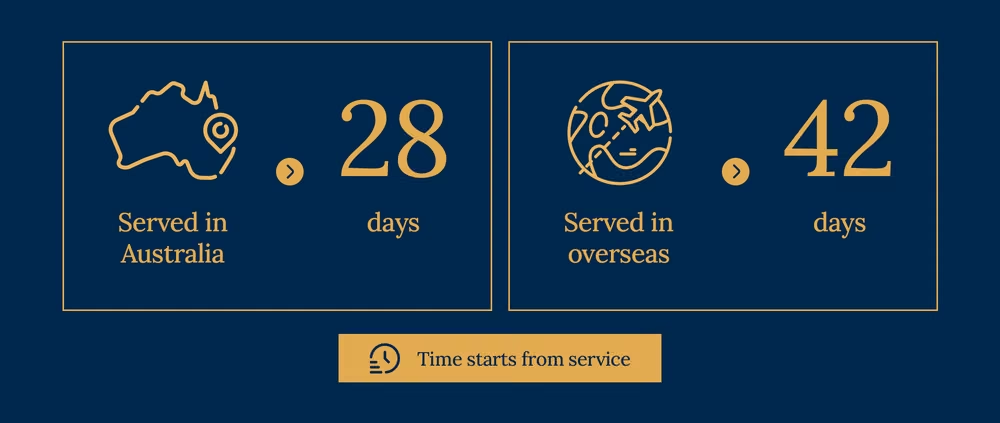
A respondent can file a Response to Divorce if they disagree with facts in the application or want to oppose the divorce. The time limit depends on where they were served and is counted from the date of service, not the court hearing or hearing date.
- If served inside Australia: the respondent has 28 days from the date they were served to file a response.
- If served overseas: the respondent has 42 days from the date of overseas service to file a response.
What happens if divorce papers aren’t signed or responded to?
If your spouse doesn’t sign or respond to the divorce papers, the application may still continue. The key issue is whether you can prove service of the divorce documents. If you are unable to serve your spouse or are having trouble serving them, you may need to ask the court for an order for substituted service or a dispensation of service.
What to do next
- If your spouse was served but did not respond: file your affidavit of service and attend the divorce hearing if required.
- If your spouse refused to sign the acknowledgement: provide other proof, such as an affidavit from the person who served them.
- If you cannot prove service: the court may delay the hearing until further evidence is filed.
- If your spouse cannot be found: you may need to apply for substituted service or dispensation of service before the hearing can proceed.
If ordinary service is not possible, you may need to file an application for substituted service or ask the court to dispense with service. If the court is satisfied that service was properly effected, it may grant a divorce even if the respondent does not attend the proceedings.
How to get divorce papers or copies of court documents
You can usually access filed divorce papers and court documents online through the Commonwealth Courts Portal. This may include your application, filed service documents, divorce order or final certificate, depending on the stage of your matter. These records can help confirm what has been filed, what has been served and whether any hearing date has been listed.
- 01
Log in to the Commonwealth Courts Portal
Use the account linked to your divorce application.
- 02
Search for your case
Open your divorce file and check the available court documents.
- 03
Download the document you need
Download the relevant divorce papers, divorce order or final certificate for your records.
- 04
Check the document details
Make sure the names, dates and court details are correct before using or sharing the document. The Federal Circuit and Family Court of Australia (Family Law) Rules 2021 set out procedural rules for family law documents, so it is worth checking that any document you rely on matches your court file.
What to bring to a divorce lawyer when serving or receiving papers
If you are unsure whether divorce papers have been served correctly, a divorce lawyer can review the documents, check any affidavit and explain what needs to happen next. This is especially helpful if your spouse has not responded, refuses to sign, lives overseas or disputes the details in the application.
Bring any emails or letters showing whether your spouse or their lawyer is willing to accept service or has agreed to accept service. This can help your divorce lawyer provide legal advice on whether the service has been properly completed.
Documents to bring
- A copy of the divorce application
- Your marriage certificate
- Any affidavit of service or acknowledgement of service
- Copies of documents served on your spouse
- Any court correspondence or hearing notices
- Messages, emails or letters between you and your spouse about service
- Any returned mail, delivery records or process server notes
If serving or receiving divorce papers has also raised parenting, property or communication issues, your lawyer can explain whether family dispute resolution may be relevant before further steps are taken.
For tailored advice, you can book a legal consultation with Carew Counsel to understand your next step before the divorce hearing.
Get professional guidance from Carew Counsel
Serving divorce papers correctly is an important step in divorce in Australia because it helps the court confirm that your spouse was properly notified. If your documents, affidavit or proof of service are incomplete, a family lawyer can help you understand what to file before the family court is asked to grant a divorce.
Need advice before serving or responding to divorce papers? Make an enquiry with Carew Counsel to book a confidential consultation.
Table of contents