
Key Takeaways
- Separation does not automatically revoke a Will, but it may create risks if your estate plan is not reviewed.
- Divorce can revoke certain gifts, appointments, and powers given to a former spouse under a Will.
- If there is no valid Will, the laws of intestacy will determine how your estate is distributed.
- Superannuation and life insurance nominations may not automatically change after separation or divorce.
- Reviewing your Will and estate planning documents after a relationship breakdown can help ensure your wishes are carried out.
Effect of separation on a Will
Separation is an important life event, but it does not automatically revoke a Will. If you pass away before updating your estate planning documents, your Will may still operate in a way that no longer reflects your current wishes. This can create uncertainty for loved ones and increase the risk of disputes.
.svg)
Your Will generally remains valid
Even if you are separated, your existing Will would still be valid unless it is revoked or replaced. This means gifts, appointments, and instructions contained in the Will may continue to apply.

Former spouse provisions may remain
Unlike a formal divorce, separation alone usually does not remove references to a spouse from a Will. An ex-partner may still be named as a beneficiary, executor, or trustee if the document has not been updated.

Estate disputes can arise
Where a Will no longer reflects current family circumstances, disagreements may occur between beneficiaries or family members after death. Reviewing your estate plan can help reduce the risk of future conflict
.svg)
Other estate planning documents matter
It is important to review more than just your Will. Powers of attorney, superannuation nominations, and life insurance beneficiaries should also be checked following separation.
Timing is important
The period between separation and a formal divorce can sometimes last months or years. During this time, an outdated Will may not accurately reflect your current intentions if circumstances change unexpectedly.
.svg)
Seek advice after major life changes
Separation is a good opportunity to review your estate plan and ensure your Will accurately reflects your wishes, your family situation, and the people you want to benefit from your estate.
Effect of divorce on a Will

Divorce can have a significant effect on a Will in Australia. While a divorce order does not automatically revoke the entire Will, it generally revokes certain clauses that benefit a former spouse. This helps ensure that assets are not unintentionally left to an ex-partner after the divorce is finalised.

Gifts to a former spouse are usually revoked
Any gift left to a former spouse under a Will is generally revoked upon the entry of a divorce order. This means the former spouse will usually no longer receive that benefit.

Executor appointments may be cancelled
If your former spouse is appointed as your executor, that appointment is typically revoked following divorce. This prevents an ex-spouse from administering your estate unless the Will specifically provides otherwise.
.svg)
Trustee roles can be affected
A divorce may also revoke the appointment of a former spouse as a trustee of property left on trust for beneficiaries that include children of the marriage or other family members.

The rest of the Will remains
Importantly, divorce does not automatically revoke the entire Will. The rest of your Will remains valid unless other provisions are affected by the legislation or a new Will is made.

Intestacy risks can arise
If revoked clauses are not replaced, there may be gaps in your estate plan. In some situations, this can result in assets being distributed in a way you did not intend.

Review your Will after divorce
Once your divorce is finalised, it is important to update your Will and other estate planning documents so they accurately reflect your current wishes and family circumstances.
Married spouses – where there is a Will
If you have separated but are still legally married, your spouse may continue to have rights and entitlements under your existing Will. Separation alone does not usually affect the validity of a Will, so provisions benefiting a spouse can remain effective until a divorce order is entered or the Will is updated.
- A valid Will provides clear instructions for managing and distributing your estate.
- Existing arrangements remain in place while you review your estate plan.
- Your assets are more likely to be distributed according to your documented wishes.

Gifts to your spouse remain effective
Any gift left to your spouse under your Will will generally continue to apply while you remain legally married, even if you are separated.

Executor appointments stay in place
If your spouse has been appointed as your executor, they will usually retain that role unless you make a new Will or formally change your estate planning arrangements.
Trustee responsibilities continue
A spouse who has been appointed as a trustee under your Will may continue in that position until the relevant provisions are changed or revoked.
.svg)
Your estate remains governed by your Will
Having a valid Will means your estate can continue to be administered according to your instructions rather than being distributed under the laws of intestacy.

Separation creates an opportunity to review
Relationship circumstances can change significantly after separation. Reviewing your Will can help ensure it accurately reflects your current wishes and intentions.

Greater control over future outcomes
Updating your estate plan after separation allows you to reconsider beneficiaries, executors, trustees, and other important provisions so they remain aligned with your personal circumstances.
De facto spouses – where there is a Will

De facto relationships can have important estate planning consequences. If you are in a de facto relationship and have a valid Will, your de facto partner may benefit from your estate if they are specifically named in the document. Depending on the circumstances, a de facto partner may also have rights under succession laws if there is no valid Will.
- A valid Will allows you to clearly provide for a de facto partner.
- Your wishes are documented and easier to follow after death.
- Estate distribution can be more certain and less reliant on default legal rules

A named partner can inherit
If your de facto partner is named as a beneficiary in your Will, they can generally receive the gifts or entitlements specified in the document.
.svg)
Executor appointments can be included
A de facto partner may be appointed as an executor, allowing them to manage the administration of your estate according to your instructions.
.svg)
Greater certainty for loved ones
A properly drafted Will can reduce uncertainty by clearly identifying who should benefit from your estate and who will be responsible for carrying out your wishes.
.svg)
Intestacy rights may still apply
Where there is no valid Will, a qualifying de facto partner may be recognised under the laws of intestacy and may have rights to part of the estate.

Relationship changes should be reviewed
Entering, ending, or significantly changing a de facto relationship is a good reason to review your Will and broader estate plan.
.svg)
Estate planning remains important
Regularly updating your Will helps ensure your estate planning accurately reflects your current relationship, financial circumstances, and long-term intentions.
Where there is no Will
If there is no valid Will, your estate will generally be distributed according to the laws of intestacy. The exact outcome depends on your family circumstances, relationship status, and the assets that form part of your estate at the time of death.
Without a valid Will, your estate may not be distributed according to your wishes. Regular estate planning reviews or Will preparation can help ensure your assets pass to the people you intend to benefit.
Is your estate plan still up to date?
Separation, divorce, and other major life changes can affect how your estate is managed and who may benefit from it. A review of your Will can help ensure your wishes are clearly documented and legally effective.
What happens to superannuation and life insurance after separation?

Many people assume that superannuation and life insurance are automatically covered by their Will, but this is not always the case. In Australia, superannuation benefits are generally held in a trust and are paid according to the rules of the superannuation fund, while life insurance proceeds may be paid according to the policy terms or nominated beneficiaries.
As a result, separation or divorce does not automatically update your superannuation and binding death benefit nominations or life insurance beneficiary arrangements. If these documents are not reviewed, a former spouse may still receive benefits even if your Will says otherwise. This is why superannuation, life insurance, and estate planning documents should all be reviewed when relationship circumstances change.
- Review your superannuation beneficiary nominations and update them if required.
- Check your life insurance policy to confirm who is nominated to receive any benefit.
- Ensure your Will, superannuation nominations, and life insurance arrangements align with your current wishes.
How to ensure your Will reflects your current wishes
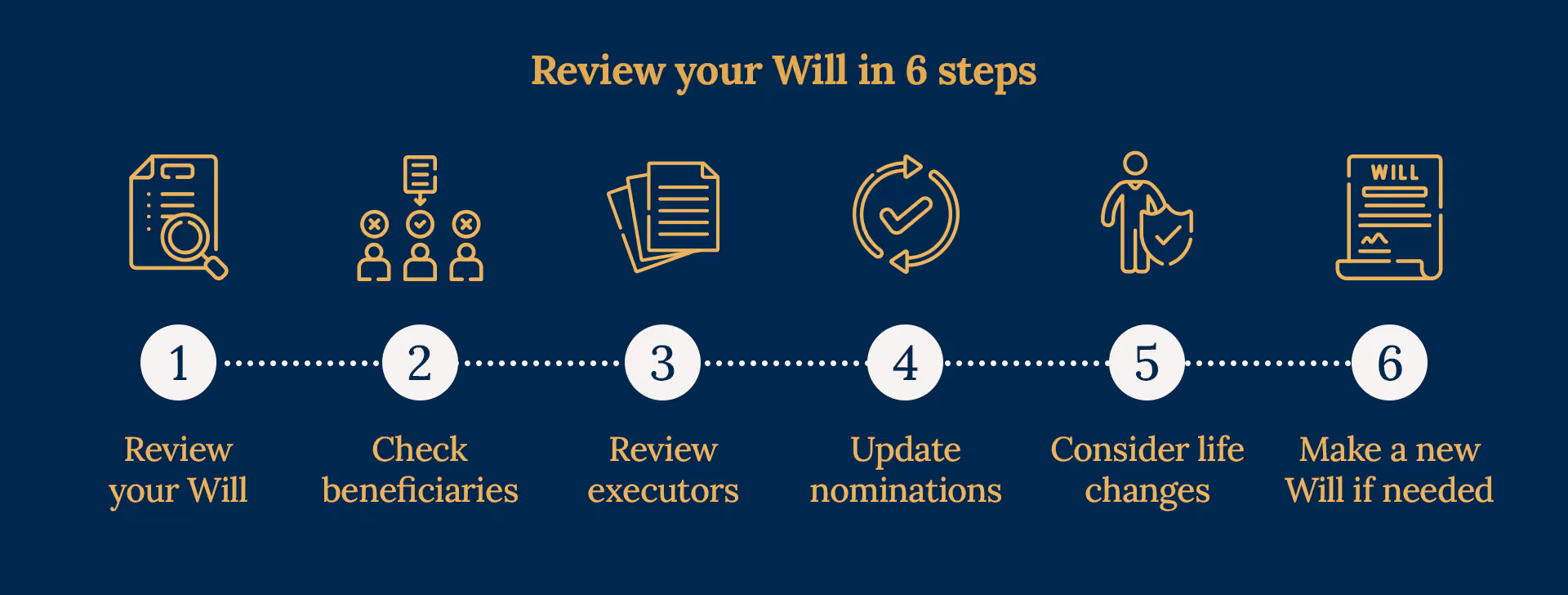
Your Will should evolve as your circumstances change. Separation, divorce, entering a new relationship, acquiring assets, or changes within your family can all affect whether your estate plan still reflects your intentions. Regular reviews can help ensure your estate is distributed in accordance with your memorandum of wishes and reduce the risk of future disputes.
- 01

Step 1: Review your existing Will
Start by reviewing your current Will to identify any provisions that no longer reflect your relationship status, family circumstances, or estate planning goals.
- 02

Step 2: Check beneficiaries and gifts
Consider whether the people named as beneficiaries are still the individuals you want to inherit from your estate and whether any gifts should be updated.
- 03

Step 3: Review executor and trustee appointments
Confirm that your chosen executor and any trustee appointments remain appropriate and that those individuals are willing and able to act.
- 04

Step 4: Update superannuation and insurance nominations
Review your superannuation beneficiary nominations and life insurance arrangements to ensure they align with your overall estate plan.
- 05

Step 5: Consider changes in your family or assets
Major life events, new relationships, children, grandchildren, property purchases, or business interests may all require updates to your estate planning documents.
- 06

Step 6: Make a new Will if required
If your circumstances have changed significantly, preparing a new Will can help ensure your estate planning accurately reflects your current wishes and provides clarity for your loved ones.
Get advice on Wills from Carew Counsel
Separation and divorce can have a significant effect on your Will, superannuation nominations, life insurance arrangements, and broader estate plan.
Obtaining legal advice and reviewing your estate planning documents after a relationship breakdown can help ensure your wishes are accurately reflected and your loved ones are protected.
Table of contents